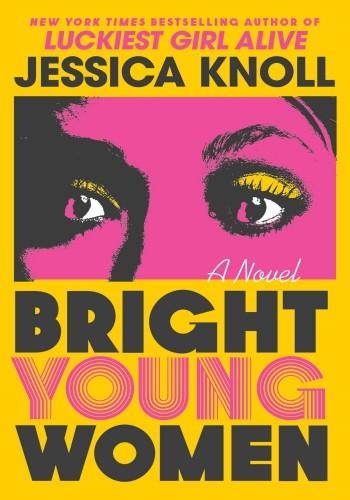
Bright Young Women
Враження
- viridianpetalділиться враженнямторік
 👎Не раджу
2.5/5. Rounded down to 2. I probably would've given it a 1.5/5, if it wasn't for my opinion that authors deserve at least two stars since they put words on the page.
I'm not even sure where to start with my review. I'll start with good things, since there's fewer of those, and it will be quicker to get through. Between 60–70%, the book was fine. Not good, but fine. The only part I enjoyed, or at least tolerated. And one of the last sentences at the very end was nice. The cover also looks beautiful. That's it, those are the good things.
Now with the bad ones. I have a problem with the mere CONCEPT of the book. The author uses tragedies from the real world, the Ted Bundy killings, as "INSPIRATION" for the book. No, I'm not exaggerating, the author states that, and the book is marketed that way. Calling him "The Defendant" doesn't make this any less true or stomach-turning. This novel, instead of making up a killer, victims, and the entire situation, decided to use a real event. That would be fine if the author stuck to the facts instead of fictionalizing survivors and the situation in a way that suits her needs. And since it's fictionalized reality, we end up with this odd mix of real situations and people whose characters and personalities are made up. Therefore, the reality and facts end up being blurred with fiction. It's almost funny, really, in an ironic kind of way. We can see the author sitting on her high horse and screaming about how "The Defendant" and the situation shouldn't be sensualized, romanticized and glorified, and yet, she does exactly that. People who have any kind of positive outlook on serial killers won't be reading this book. It will be generally normal people who see them as monsters that they are. The author isn't changing anyone's mind. She's preaching.
There is something so unexplainably disgusting and cruel about profiting off of the survivors who went through such a tragedy, and I can't even put it into words. Apparently, the author got permission from one of the actual survivors who inspired Pamela's character(Kathy Kleiner, it's stated in acknowledgments) but I'm going to be honest, I doubt it. I'm not willing to give the author the benefit of the doubt.
Now if we put aside the cruelty and the inherent immorality of the book, which is hard to do, it's badly written overall. The pacing is diabolical — we switch between Ruth's and Pamela's POVs every chapter, and it doesn't flow smoothly. The characters are giving exposition dumps all the time. For example, on more than one occasion, Pamela thinks about her complicated feelings regarding her mother before suddenly switching to thinking about when her parents got married and how her mother likes parties. And again, on more than one occasion, Pamela gets told something horrific and, instead of having any sort of reaction, she just recites a "fun fact". For example, she gets told about a murdered woman and during that she thinks about how to protect your neck during a bear attack. It's not quirky, it's annoying. If the author was trying to display some sort of depersonalization or numbness, then she failed. It wasn't fleshed out, at all. Another thing about the novel is the amount of bloat. God only knows how much the editor cut out. But it wasn't enough. The very last thing that I'll mention in passing is the sorority house — it's essentially a cult that the author tries to convince us is normal. It isn't. It's demented. The rest of the world has college dorms, but it isn't cult-ish, and the children/students aren't the ones managing themselves.
That's it, that's the review. - Habitante de libroділиться враженням8 місяців тому
 👍Раджу🔮Мудра💡Пізнавальна🎯Корисна
Цитати
- Habitante de libroцитує8 місяців томуThe Myth of Closure served as inspiration for Tina’s work with “complicated grief.”
- Habitante de libroцитує8 місяців томуThings grow differently when they’re damaged, showing us how to occupy strange new ground to bloom red instead of green. We can be found, brighter than before.
- Habitante de libroцитує8 місяців томуKids who are raised in hostile environments are seven times more likely to become violent perpetrators as adults,